

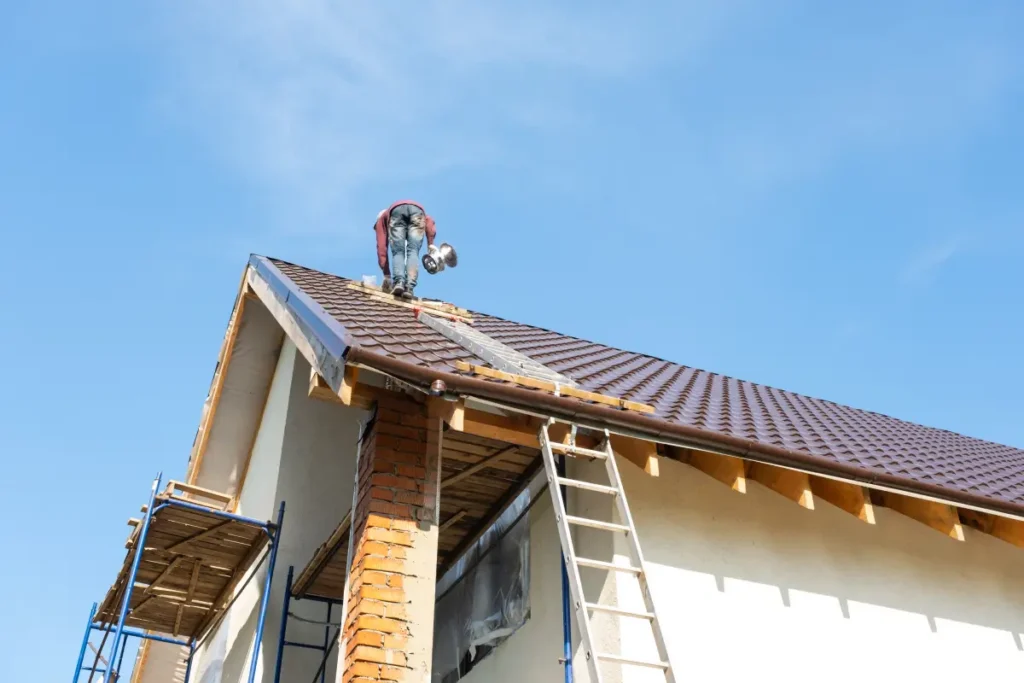
Most homes in Fayetteville end up with one of four roofing materials: asphalt shingles, metal, tile, or a flat, low-slope system. The right pick depends on your roof’s pitch, your budget, and how well the material holds up against North Carolina’s heat and humidity.
That last part matters more than most homeowners realize. A roofing material that performs great in Arizona can struggle here. Below, we’ll walk through each option, what it costs, how long it lasts, and what we actually see when we’re up on Fayetteville roofs every week.
The Four Main Types of Roofing Materials
Before you pick a material, it helps to know what’s actually out there. Here’s a quick look at the main options for homes in our area.
| Material | Best For | Typical Lifespan | Wind Rating |
| 3-tab asphalt shingles | Tight budgets, repairs | 15–20 years | Good |
| Architectural shingles | Most homes, budget-friendly | 25–30 years | Very good |
| Standing seam metal | Steep roofs, long-term owners | 40–70 years | Excellent |
| Tile | Mediterranean or Spanish-style homes | 50–100 years | Very good |
| Flat/low-slope systems | Additions, porches, some ranch homes | 15–30 years | Varies by system |
Metal lifespan above is for standing seam panels. Lower-grade corrugated metal panels typically last less, closer to 25–40 years.
Asphalt Shingles
Asphalt is the standard choice for a reason. It’s affordable, easy to install, and comes in dozens of colors and styles. You’ll find two main types: 3-tab shingles, which are flat and budget-priced, and architectural shingles, which are thicker, more textured, and hold up better in storms.
Metal Roofing
Metal roofing costs more upfront, but it can outlast two or three asphalt roofs. It sheds rain fast, reflects summer heat, and stands up well to the wind gusts that come with our tropical storm season.
Tile Roofing
Clay and concrete tile give a home a distinct look and can last a lifetime with basic care. Tile is heavy, though, so your roof deck needs to be built to support it. Not every older Fayetteville home can handle the extra weight without reinforcement.
Flat and Low-Slope Systems
If part of your home has a flat or nearly flat section, like a porch roof or an addition, it needs a different material entirely. TPO, EPDM rubber, and modified bitumen are the common choices, and drainage design matters as much as the material itself.
How Long Each Material Lasts in Our Climate
Did You Know? Fayetteville’s humidity speeds up algae and moss growth on roofs more than almost any other factor. That green or black streaking you see on older asphalt roofs isn’t just cosmetic. It traps moisture against the shingle and can shorten its life by several years.
Lifespan numbers you find online usually come from national averages, not our climate. In practice, standard 3-tab asphalt shingles here tend to run toward the shorter end of their 15-to-20-year range, while algae-resistant architectural shingles hold up noticeably longer. Metal sheds moisture fast enough that humidity barely touches it, which is a big part of why it lasts so long here. Tile is a little more nuanced: concrete tile can grow surface algae and moss in a humid climate too, but that growth doesn’t cause the same structural wear that granule loss causes on asphalt, so tile’s long lifespan holds up either way.
What Each Roofing Material Costs
Material choice is usually a budget conversation first. Here’s a general cost range per square foot installed, based on current material and labor pricing in our area.
| Material | Cost Per Sq. Ft. (Installed) |
| 3-tab asphalt shingles | $3.50–$6 |
| Architectural shingles | $5.50–$8.50 |
| Standing seam metal | $9–$16 |
| Tile roofing | $9–$22 |
| Flat/low-slope systems | $5–$14 |
Metal prices have trended higher recently due to steel and aluminum tariffs. Get a current quote rather than relying on last year’s numbers.
Pro Tip: Don’t just compare sticker prices. A standing seam metal roof at $12 per square foot that lasts 50 years works out to roughly $0.24 per square foot per year. An architectural shingle roof at $7 per square foot that needs replacing around year 25 works out to about $0.28 per square foot per year once you count the second roof. The gap isn’t huge, but it flips the “cheaper” material once you run the full lifespan instead of just the upfront number.
What We See Most on Fayetteville Roofs
Pro Tip: Architectural shingles hold up better than 3-tab in humid, tree-covered lots like much of Cumberland County, since their added wind and algae resistance offsets the higher upfront cost over the life of the roof. Most roofers recommend them as the default for full replacements, reserving 3-tab shingles for tight budgets or matching an existing repair.
We also see a lot of tile roofs go in without anyone checking the deck’s load capacity first. If you’re drawn to tile for the look, get your roof structure evaluated before you commit. It’s a lot cheaper to reinforce a deck upfront than to fix a sagging one later.
Question: Which roofing material lasts the longest in North Carolina? Answer: Metal roofing typically lasts the longest here, often 40 to 70 years, because it resists the humidity, algae growth, and storm wind that wear down other materials faster in our climate.
How to Choose the Right Material for Your Home
Start with your roof’s pitch. Flat and low-slope sections rule out shingles and tile entirely. From there, weigh your timeline: if you plan to stay in your home for decades, the higher upfront cost of metal or tile can make sense. If you’re working with a tighter budget or a shorter time horizon, architectural asphalt shingles usually offer the best balance of cost, looks, and performance.
It also helps to see your options side by side before deciding. Our shingle options page shows the current Owens Corning and GAF lines we install most often, including colors and warranty details. And if you want the full picture on materials, costs, and when to repair versus replace, our residential roofing guide covers the whole process from first inspection to final walkthrough.
Get a Recommendation Built for Your Roof
The right roofing material comes down to your roof’s shape, your budget, and how long you plan to own the home. Asphalt shingles fit most Fayetteville houses, but metal, tile, and flat systems each have a place depending on your situation.
If you’re planning a roof replacement and aren’t sure which material makes sense, we’ll walk your roof and give you a straight answer. Contact Blue Ribbon Roofing today for a free estimate, and we’ll help you pick a material that actually fits your home.
FAQ
How do I know if my roof can support tile? Most standard wood-frame homes need a structural check before adding tile, since it’s significantly heavier than asphalt or metal. A roofing contractor can inspect your deck and rafters to confirm whether reinforcement is needed before installation.
Is metal roofing worth the extra cost? For most homeowners planning to stay long-term, yes. Metal’s 40-to-70-year lifespan often means you never replace it again, which can make it cheaper than asphalt over the life of the home.
Can I mix roofing materials on one house? Yes, this is common when a home has both sloped and flat sections. A sloped roof might use architectural shingles while a porch or addition uses a flat system like TPO.
Do dark-colored shingles make my attic hotter? Slightly, but modern shingles include reflective granules that limit heat absorption. Proper attic ventilation affects indoor temperature far more than shingle color does.
How often should I have my roofing material inspected? Most materials should be inspected once a year and again after any major storm. Regular checks catch small issues, like lifted shingles or cracked tiles, before they turn into leaks.